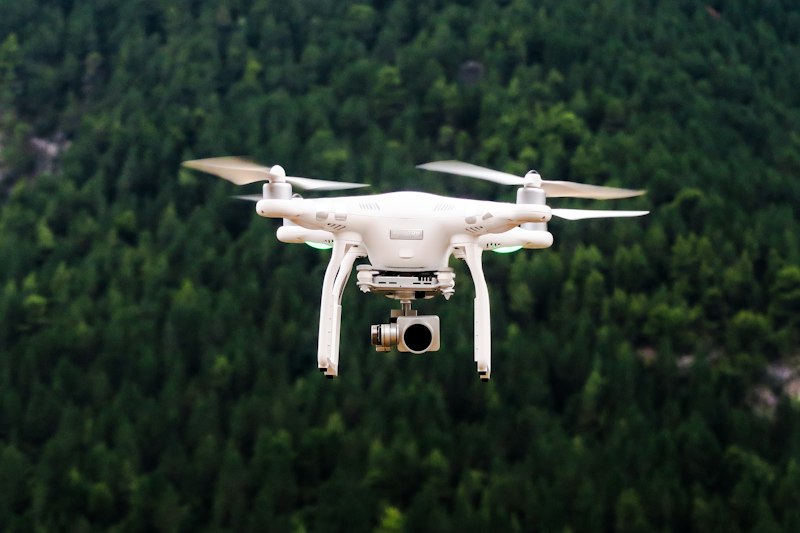
Drones and Hyperspectral Imaging Catch Wastewater Pipeline Leaks Early
Seeing the Underground Problem from Above
Wastewater sewer networks sit underground, so leak detection has traditionally relied on internal CCTV inspection or hydraulic testing. The combination of hyperspectral imaging and unmanned aerial vehicles (UAVs), which has matured rapidly over the last three years, offers a new method capable of detecting anomalies along the line from above ground.
How the Technology Works
Hyperspectral cameras collect light spectra across hundreds of narrow bands invisible to the eye, producing the "spectral fingerprint" of a surface. At a wastewater leak point, the soil moisture profile, vegetation stress response and microbiological activity change distinctly. These differences can be detected through hyperspectral algorithms.
Field Trial Results
Notable findings from field trials in the Netherlands, Germany and Denmark:
- Scan time: 12 minutes on average per kilometre of line
- Detection sensitivity: leaks of 0.5 L/minute and above
- False positive rate: 8 percent (confused with post-rain moisture)
- Previously unnoticed leak detection rate: 12 percent
- Cost: 280–450 euros per kilometre
Interpretation with AI
Interpreting hyperspectral data requires heavy computation. Deep learning models trained on thousands of leak cases can distinguish wastewater leaks from drinking water, stormwater or natural moisture sources. Since the models run in the cloud, post-scan reports can be delivered within 4–6 hours.
Economic Gain
Early leak detection translates directly into economic gain for water utilities:
- Reduced water loss (in revenue terms)
- Prevention of groundwater contamination
- Reduced risk of road collapse and accidents
- Repair costs kept small in scope (proactive repair)
- Avoidance of regulatory penalties
The payback period for preventive scanning typically falls in the 3–7 year band.
Early Pilots in Turkey
In Turkey, UAV-based leak detection pilots have started at the metropolitan water utilities in Istanbul, Izmir and Ankara. Initial pilot costs per kilometre are reported to be close to those in Europe. As the local service provider ecosystem grows, costs are expected to drop significantly.
Application Limits
There are conditions where the technology does not work effectively: lines under dense building blocks, deep underground levels (above 8 metres), areas under heavy vegetation, and the immediate aftermath of rainy periods. In these cases, classic in-line inspection methods continue to be used as complementary techniques.
Market Outlook
The global UAV-based water infrastructure monitoring market is expected to grow 22 percent annually over the next five years, reaching 3.8 billion USD. Falling hyperspectral camera prices are making the service accessible to mid-size water companies as well.